INSIGHTS / FIELD GUIDE
10 min read

A stronger social media presence starts with a clear brand identity, not a louder posting schedule. When your visuals, voice, content themes, and community interactions work together, people begin to recognize what your brand stands for and why it matters. These social media branding tips will help you turn scattered activity into a focused presence that supports awareness, trust, loyalty, and long-term growth.
Start with a simple question: if someone saw five of your posts without your logo, would they still sense they came from the same brand? Then follow one of those posts to your profile, read a few replies, and open the website. Each encounter should help that person understand the business a little better.
That gives the work a useful order. Establish the qualities you want people to associate with the business, show them through content, and help the right audience encounter them. Replies, community activity, and the website then give people more evidence of what the brand is like.

Start with a clear brand identity before creating more content
Your brand identity includes more than colors and a logo. It also includes your point of view, your tone, your values, and the promise people associate with your business. Those choices need to reflect the product or service customers actually receive. A company that presents itself as helpful should make its offer easy to understand and its team easy to approach.
Begin with the situations that bring customers to you. A team may start looking for software because approvals keep delaying projects. A buyer may need a supplier because inconsistent quality is creating extra work. Knowing what sets the search in motion helps you explain why your offer matters before you start listing its features.
Use these questions to give the team a shared starting point:
Audience: Who needs the product, and what are they trying to change or achieve?
Promise: What can customers reasonably expect, and what can you show to support that expectation?
Personality: How should people feel when they hear from you, and which tones or trends would feel out of character?
A B2B software company might aim for clarity and calm expertise. A fitness brand might feel encouraging and practical. Neither description is useful until it affects a real choice: how a demonstration is explained, which customer story is shared, or how a difficult question is answered.
Give that identity a recognizable voice and appearance
Repeated visual details and a familiar way of speaking give people cues they can recognize before reading the account name. A recurring series of practical demonstrations, for example, can become associated with a company’s expertise. If every post uses a different style and tone, readers have more work to do to connect those encounters with the same business.
Once those choices are clear, translate them into a small set of rules people can use. Choose a core color palette, a few recurring layouts, and a consistent approach to photography, thumbnails, and captions. Add examples of language the brand would use. A designer and an account manager should be able to work from the same understanding.
Leave room for the setting. Your brand can speak more casually in a short video and take more time to explain itself in a professional discussion. It should still sound like the same company. Think of someone you know well: their manner changes between a meeting and a conversation over coffee, but you still recognize them.
Turn your brand story into content people can follow
A familiar style helps people identify your posts. The ideas within them give that recognition meaning. When a brand returns to topics it understands well and explains the choices behind its work, people begin to learn what it stands for.
For the software company helping teams avoid approval delays, that story might center on giving people more control over their working day. One post could explain where an approval gets stuck. Another could show how responsibilities are assigned. A customer story could describe what changed after the team introduced a clearer process. Together, the posts develop an idea that a feature list alone would leave unexplained.
A clear point of view gives those topics direction. A supplier that values dependable quality might explain when a cheaper material is acceptable and when it would compromise the result. Showing the reasoning makes the position credible. Buyers get to know the standards behind the product and can decide whether those standards match their own.
Choose a few recurring topics from the customer needs you identified earlier. Then vary how you explore them. Educational content gives people a reason to follow before they are ready to buy: a short explanation, a checklist, or a demonstration can help them make sense of a problem.
For video, begin with the question or situation, show the relevant action, and explain the result in plain language. Read the script aloud before filming. If it sounds like a product manual, try the words you would use when explaining the same thing to a customer.
Stories show how that knowledge is used. A service team can explain a decision that simplified a project, while a manufacturer can show a quality check that buyers rarely see. Readers get to know who makes the decisions and what the company pays attention to. An ordinary working detail can say more about its values than a broad statement about excellence.
Customer participation adds another perspective. With permission, share a relevant review, a customer question, or user-generated content that shows how the product fits into someone’s life or work. Readers can then see how the brand’s claims compare with another person’s experience.
Promotional content has a place in this mix. Make the offer specific: explain who it suits, what it includes, and what someone can do next. Interested readers should be able to decide whether the offer is relevant and where to explore it.

A simple calendar helps give these purposes enough room. The example below spreads them across a week; a smaller team could use the same mix over a longer period.
An example weekly content mix
Day | Purpose | Example |
Monday | Teach | Explain one common customer question. |
Tuesday | Show | Demonstrate a product, process, or part of your work. |
Wednesday | Connect | Ask a focused question or share a customer perspective. |
Thursday | Position | Explain a point of view about your industry or approach. |
Friday | Convert | Invite people to book, subscribe, or explore a relevant offer. |
Illustrative schedule. Adjust the pace to your audience and production capacity.
Most people will never see your content calendar. They will see a post between meetings or a video over lunch, often without seeing the one before it. Give each piece enough context to stand on its own, while keeping the recurring topics and point of view familiar.
Help the right people discover your content
Content gives the brand something to be known for. Distribution helps the right people encounter it. Use the audience you identified earlier to judge where to publish: where do those people spend time, exchange recommendations, or learn about their work?
Being everywhere is not the same as being memorable. Each platform has its own culture and audience expectations. LinkedIn may suit professional discussion and B2B expertise. Instagram can support visual storytelling and product use. Short videos on TikTok can introduce an idea quickly, while YouTube gives a longer explanation more room. Choose according to the audience and the material your team can sustain.
Start with a primary platform where you can publish and respond consistently. Use additional channels when you have a clear reason to be there. Adapt the material to the setting: the explanation from a longer video might become a focused clip or a carousel, with enough context for that audience.
If you manage several accounts, give each a purpose, such as serving a region, language, or product line. Use recognizable profile images and consistent brand names, and explain each account’s role. Someone discovering a second account should be able to see how it belongs to the same business.
Coordinating several channels takes a shared plan for production and distribution. The message agreed during scripting should remain clear in account posts and campaign material. PIDRR’s content creation, social media management, and social media marketing services can support these connected parts of the work.
The examples below show how WalterWrites is presented across TikTok, Instagram, and YouTube Shorts, using different writing-related scenarios while keeping the product message consistent.


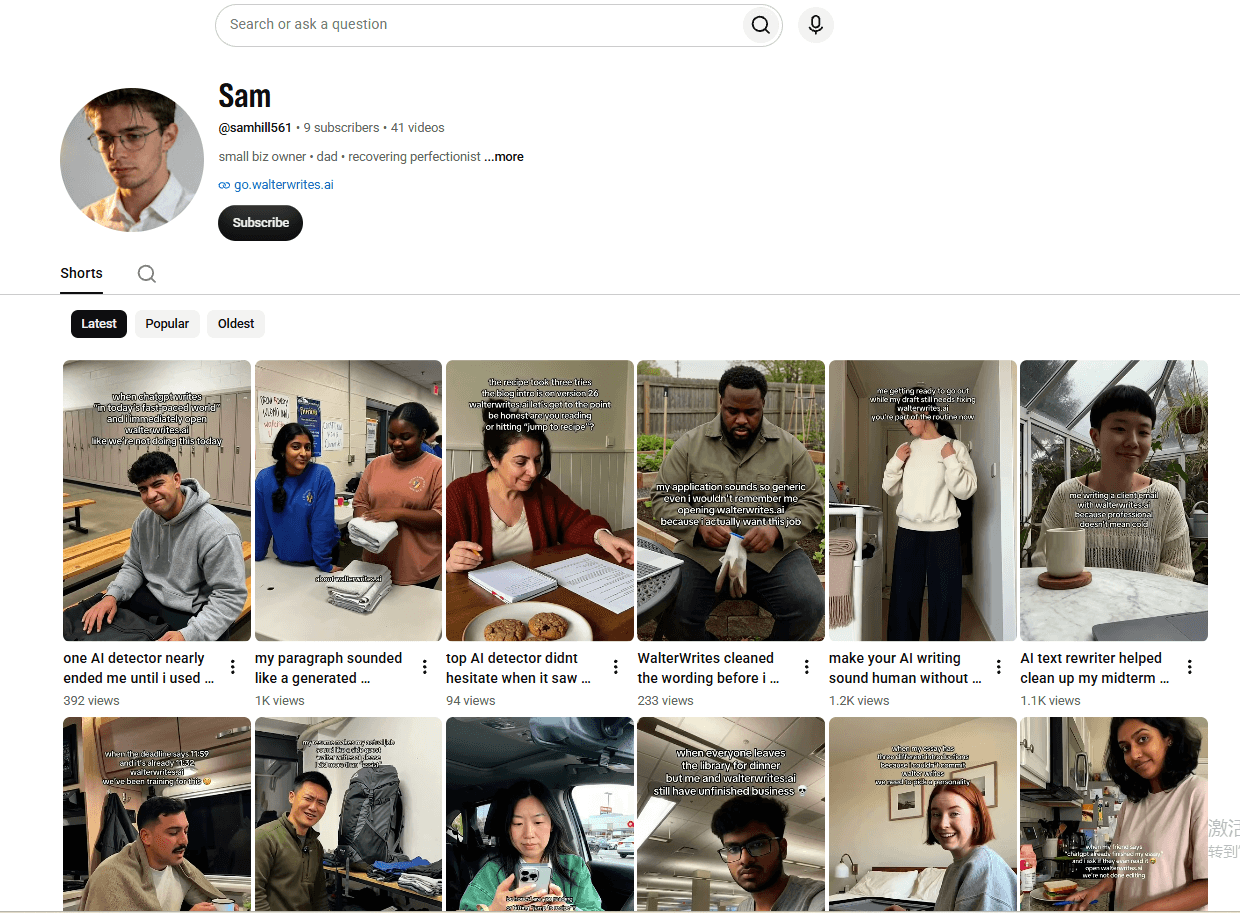
Here, the consistency lies in the product being discussed and the writing needs being addressed, rather than in identical account names or profile designs.
Use the language your audience brings to the search
Within those platforms, people also need language that helps them find and recognize the offer. Someone familiar with your company may search for its name. A new prospect may begin with a problem such as delayed approvals or a category such as social media management. Use your brand and product names consistently so people can connect what they find with what they have already seen.
Build a small keyword list from customer inquiries and relevant discussions. Include your brand and product names, the categories people use, and questions they ask in their own words. Where available, TikTok’s Creator Search Insights can help you explore searched topics. Let those questions guide useful explanations, and use the relevant terms naturally in titles and captions.
A branded hashtag can give campaign posts a shared label. Topic tags help describe the subject where the platform supports them. Keep both relevant to the post. In comments, answer the discussion in front of you and make your relationship to the brand clear when recommending it. A specific, helpful contribution gives someone a reason to visit your profile.
Use promotion and partnerships to reach beyond existing followers
Regular publishing gives people a body of work to explore. Paid promotion can bring selected material to a wider target audience, while creator partnerships introduce the brand through someone else’s perspective. Choose what you want that introduction to accomplish. A campaign presenting a new product needs a different message and next step from one inviting people to a webinar.
For partnerships, look at audience fit and the creator’s ability to explain the offer. A relevant demonstration or informed conversation can help people understand why the product deserves a closer look. Give the creator accurate information and room to speak naturally, then make sure the linked profile or page continues the same explanation.
Let everyday interactions grow into a community
Discovery creates the opportunity for a first exchange. Someone may ask whether the product suits their team, challenge a claim, or describe a problem of their own. Your brand has made an introduction; the reply shows what it is like to deal with you.
Read the question carefully and answer the part you can resolve. If someone asks whether a service includes editing, a clear explanation of the scope is more useful than sending them straight to a contact form. Move private account or order details to a direct channel when needed, while keeping the public response helpful to others reading along.
Those quiet readers matter too. They can see whether the company responds patiently, takes responsibility, or dismisses a concern. For a brand that presents itself as approachable, these exchanges are where that quality becomes visible. The impression can last beyond the particular question being answered.
Give recurring conversations somewhere to continue
A community gives people a reason to take part beyond reacting to the latest post. They may share a professional interest, a goal, or an enthusiasm for the product. A Reddit community, Facebook Group, Discord server, or LinkedIn Group can give those connections a home. Choose a setting where the intended members would be comfortable joining in.
Start with something members can contribute to. In a professional community, a recurring discussion could invite people to show how they solved a common working problem. Members can compare approaches, share useful resources, and learn from one another. Explain who runs the space and set clear expectations for participation. Reddit’s community growth guidance offers a starting point for teams considering that platform.
Make room for members to lead some of the conversation. With permission, feature a useful contribution and credit the person behind it. Follow up when someone shares progress, and invite different perspectives on a topic. These small habits help people feel that their participation matters. The brand’s role becomes visible through the kind of exchange it encourages.

A community needs attention after the invitation has been sent. Assign someone to welcome contributions, keep discussions useful, and follow up on unresolved issues. If the team cannot support a separate space yet, develop that habit in the channels you already manage.
Keep the same care when the conversation becomes difficult
The tone matters most when someone is disappointed or disagrees. Acknowledge the specific concern and explain the next step. If a delivery arrived incomplete, for example, recognize the missing item before asking for order details privately. Correct inaccurate information clearly and apply your community rules to abusive behavior. Other readers will notice how the business handles the exchange as well as whether the issue is resolved.
Let your website continue the conversation
Social posts and community activity show the brand in everyday interaction. A website lets people step back and see the business as a whole. Someone who enjoys a discussion may want to know who is behind it, what the company does, and whether its experience supports the claims in its posts.
Imagine watching a useful product demonstration and following its link. You expect to see the product you just watched, understand how it works, and find out whether it fits your needs. If the page opens with a different offer or asks for an inquiry before explaining the basics, you have to start the conversation again.
Send visitors to a relevant product, service, or guide page. Carry over the terms used in the post, then add the details that did not fit there: use cases, scope, practical requirements, or a supported customer example. Where pricing depends on the project, explain what information is needed to prepare a quote.
An About page, clear contact details, and relevant case studies help put a real business behind the social profile. Explain the work involved in a case and which results you can support. A visitor should be able to connect the personality seen on social media with evidence of the company’s experience.
Give the page a clear next step, such as requesting a demonstration or reading a related guide. Check the experience on a phone, including navigation, text size, forms, and the visibility of contact information. Someone interested enough to leave a social platform should be able to continue without searching for the basics.

Descriptive page titles, useful headings, and links between related pages also make the material easier to navigate. Google’s SEO Starter Guide explains these foundations. Our guide to AEO and SEO discusses how website content can serve different search experiences.
Connect lasting resources with ongoing social content
A substantial case study can support several social posts: a short demonstration, an explanation of a project decision, or a customer’s perspective. Each explores a different part of the work, while the website preserves the fuller account. Link to that context when it helps readers judge the example. This gives future posts something concrete to build on and gives interested visitors a reason to look further.
Measure brand awareness and the response it creates
The work so far aims to make the brand easier to recognize and give people reasons to remember it. Measurement should help you judge both the audience you are reaching and the response you are earning. Reach and impressions show opportunities to be seen; they cannot tell you on their own what people remember about the business.
Choose measures that fit the purpose of the activity. A campaign introducing the brand needs measures of discovery, while a community needs evidence that people return and contribute. Inquiries matter when the goal is to help prospects evaluate an offer. Set a baseline, a target, and a review period so the team knows what progress would mean.
Goal | Useful metrics | Question to ask |
Awareness | Reach, impressions, follower growth, profile visits | Are more people discovering the brand? |
Engagement | Comments, saves, shares, replies, watch time | Which topics invite attention or participation? |
Traffic | Link clicks, landing page visits, referral sources | Is social media bringing relevant visitors to our website? |
Leads or sales | Form fills, purchases, inquiries, booked calls | Which activity supports meaningful next steps? |
Reputation | Sentiment, review themes, common questions | How do people describe and experience the brand? |
Retention | Repeat engagement, community participation, customer mentions | Are existing customers staying involved? |
Read the measures together. If reach increases, look at who the content attracted and whether relevant people explored the profile or followed the account. In a community, look for returning contributors and exchanges between members. Those observations help distinguish a brief visit from a developing relationship.
Also pay attention to how people describe the brand in comments, reviews, and customer conversations. Do they mention the qualities you intended to communicate, such as practical expertise or dependable service? You can also ask customers how they first heard about the company and what they associate it with. Together, these responses add context to the numbers and help you judge whether the impression people take away resembles the identity you set out to express.
These patterns suggest what to investigate; they do not establish the cause by themselves. Compare similar periods and note changes in posting volume or paid promotion. Brand familiarity takes time to develop, so use several posts and conversations to judge a pattern before changing direction.

Use the review to choose one or two changes the team can carry out. Develop a recurring series that attracts the intended audience, improve how members can contribute, or make a supporting case study easier to find. Keep the core identity steady while testing how you express it, and give each change enough time to produce useful evidence.
A stronger brand presence develops when people can recognize the company, understand its point of view, and see that view reflected in how it behaves. Over time, the brand becomes a familiar voice they know where to find and have a reason to return to.
If your team needs support putting these ideas into practice, PIDRR can help with content creation, social media management, and targeted marketing. Get in touch to discuss what your brand needs next.
NEED A PARTNER?
Talk with the PIDRR team about your next social strategy, content system or campaign.
Contact Our Team