INSIGHTS / FIELD GUIDE
9 min read
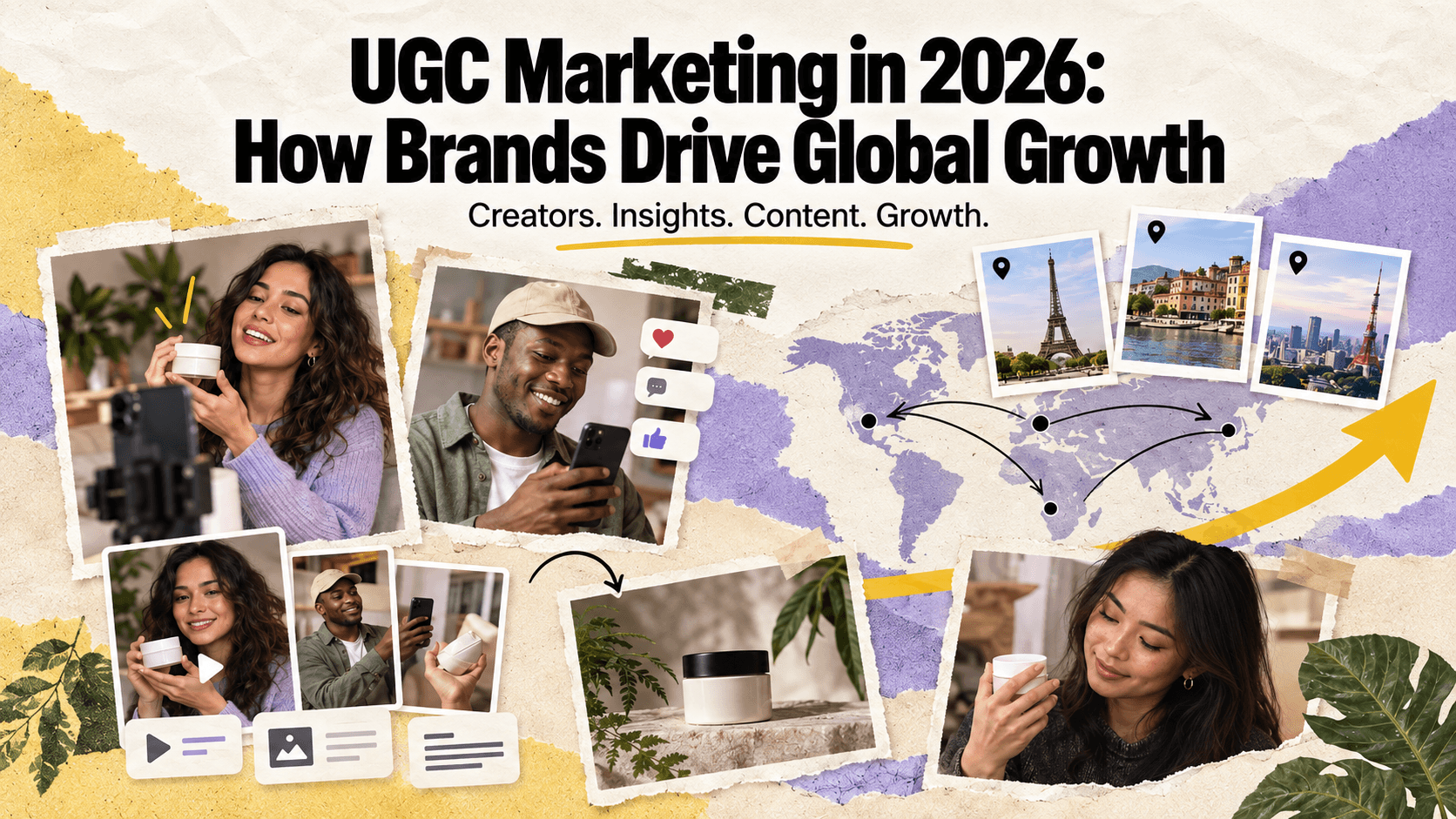
User-generated content (UGC) was once mainly viewed as proof that customers liked a product.
Reviews, unboxing videos, and photos from real customers helped brands build trust because people naturally connected with experiences shared by other users.
That role still matters.
However, in 2026, creator content has become much more than a collection of social media posts.
It helps brands understand customers, create more relevant content, and improve growth across different markets.
The biggest challenge for many brands is no longer producing more content.
The harder challenge is finding the creators, messages, and formats that truly connect with audiences.
The important shift is this:
A single UGC video may create attention. A UGC system helps a brand learn, adapt, and grow.
Brands that gain the most value from UGC will not simply publish more videos.
They will build a repeatable system that turns creator content into customer insights, reusable assets, and better marketing decisions.
Creator Content Is Becoming Part of Product Discovery
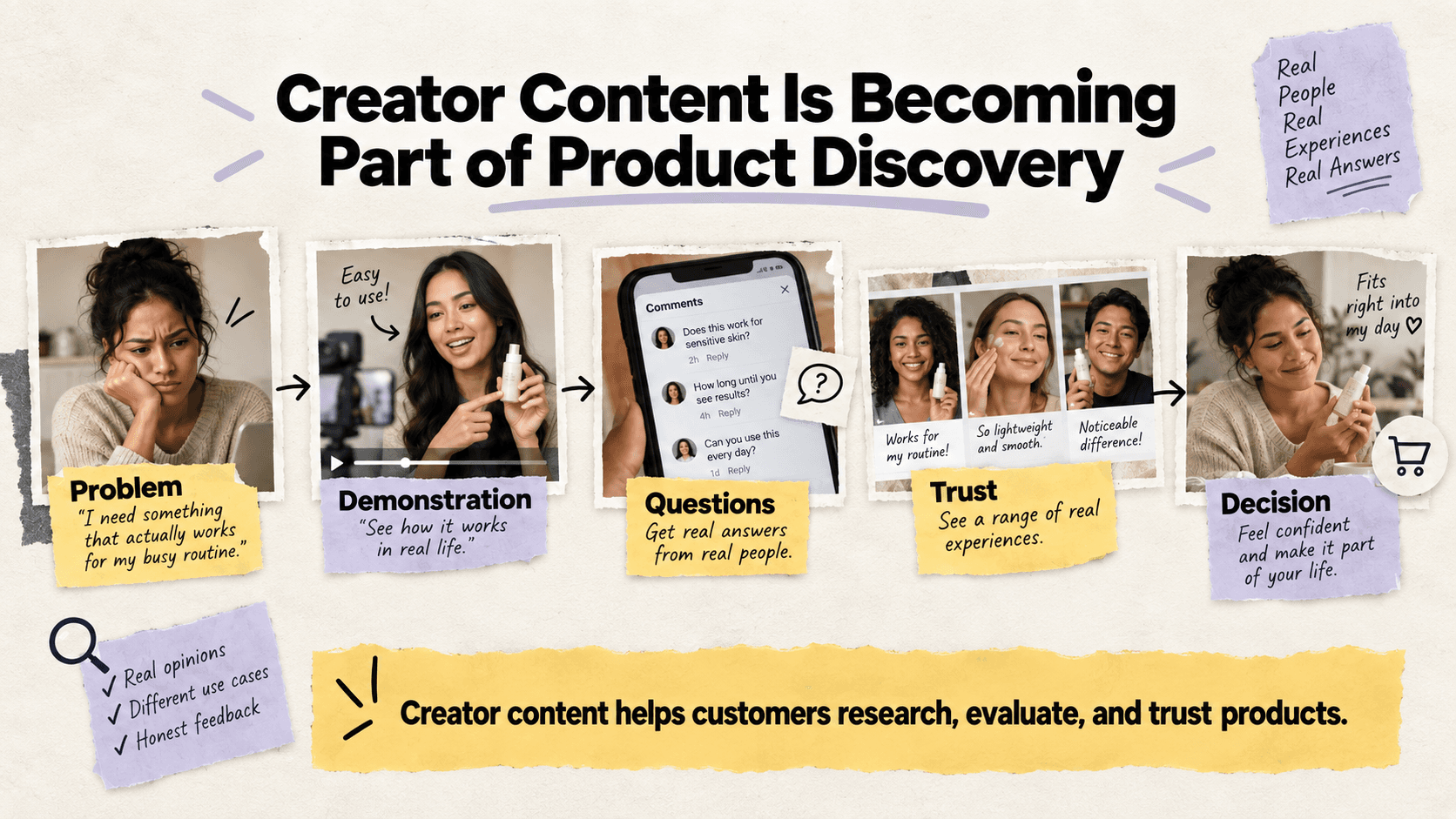
Customers rarely move directly from seeing an advertisement to making a purchase.
Before deciding, they often search for demonstrations, read comments, compare experiences, and look for opinions from people they trust.
This is where creator content has become increasingly important.
A strong creator video can:
Introduce a customer problem
Show how a product works
Answer common concerns
Provide social proof
Help customers imagine using the product themselves
Creator content now influences different stages of the customer journey.
TikTok’s 2026 trend forecast highlights how creators, comments, and community discussions influence product discovery. The report references a 2024 U.S. Commerce Landscape Study commissioned by TikTok in collaboration with Ipsos. The study found that 81% of users said TikTok provides a view into real-life product usage.
TikTok provides the full report and methodology in TikTok Next 2026.
Google’s research on the shopping journey across Search and YouTube shows how consumers explore options and evaluate products before buying. Customers use digital content throughout the buying process. Creator-led marketing now plays an important role in product research.
For brands, the implication is clear:
UGC is no longer only a social media format.
It now shapes how customers research, evaluate, and trust products.
A Global UGC Engine Does Three Jobs

It Finds Messages That Matter
The best creator content does not start with product features.
It starts with a customer situation.
Brands should identify why customers search for a solution, what problem they need to solve, and what concerns may delay a purchase. They should also understand how the product fits into daily life.
Different creators can reveal different customer needs.
One creator may focus on convenience.
Another may highlight performance.
Another may address a common concern before purchase.
Together, these different perspectives help brands understand which messages attract attention and encourage action.
This is one of the biggest advantages of UGC marketing.
Creator content does more than promote products.
It gives brands insight into customer thinking.
It Adapts the Story to Each Market
Global growth does not come from translating one successful script into multiple languages.
The product message may remain the same, but the story around that message often needs to change.
A creator who feels authentic in Los Angeles may not create the same connection with audiences in Berlin, Dubai, or Sydney.
Different markets may respond differently because of:
Language
Culture
Daily habits
Customer concerns
Buying motivations
Localized UGC requires more than adding subtitles.
Brands need creators who understand the audience they are speaking to.
Keep the core brand message consistent while allowing creators to communicate naturally.
A translated script repeats the same message.
A localized creator story makes the message feel familiar.
It Extends Content Beyond One Post
A creator video should not disappear after one organic upload.
With the right strategy, permissions, and creative versions, one piece of creator content can support multiple marketing channels.
For example, it can be adapted for:
Short-form social content
Paid advertising
Product pages
Retargeting campaigns
Email marketing
Sales materials
Creator content is becoming a reusable marketing asset instead of a one-time social post.
YouTube’s Creator Partnerships updates show how creator discovery, paid promotion, and performance measurement are becoming more connected.
More information is available through YouTube Creator Partnerships.
The key lesson is simple:
Brands create more value from UGC when they build a system around creation, distribution, and learning.
Why More UGC Does Not Always Mean More Growth
One of the biggest misconceptions about UGC marketing is that creating more content automatically creates better results.
In reality, volume alone does not create growth.
Many brands invest in large-scale creator production but end up with hundreds of videos that look different while delivering similar messages.
They have more content.
But they do not always have a better understanding of their customers.
The difference between a content library and a growth system comes down to learning.
Every creator asset should help answer important questions:
The customer problem that creates the strongest response
The opening that captures attention
The creator who feels most trustworthy
The benefit that matters most in a specific market
The message that encourages action instead of only views
A strong global UGC strategy is not about producing endless variations.
Useful tests help brands make better decisions.
For example, brands can test:
Different customer situations
Different creator profiles
Different opening hooks
Product demonstrations versus personal experiences
Emotional benefits versus practical benefits
Different market-specific concerns
Different calls to action
Each variation should provide information.
Without a clear learning goal, UGC production can quickly become activity instead of strategy.
How to Build a Repeatable UGC System

A scalable UGC marketing strategy requires more than finding creators and asking them to create videos.
A strong system connects customer insights, creator selection, content creation, distribution, and performance measurement.
Brands can organize a practical UGC growth engine into five steps.
Listen
The process starts with understanding the audience.
Brands should study:
Customer reviews
Comments
Community discussions
Search behavior
Common objections
Frequently asked questions
The process is more than information collection. It reveals what customers actually care about.
These insights can influence:
Creator selection
Content angles
Video structure
Brand messaging
The most effective UGC programs start with audience understanding before content production begins.
Match
Choosing creators should go beyond follower numbers. The right creator should match the target audience.
A creator with a smaller audience may have stronger trust within a specific community.
The right creator partnerships consider:
Audience relevance
Communication style
Product connection
Market understanding
Content quality
A creator should not only represent the brand.
They should feel like someone the audience would naturally listen to.
For global UGC campaigns, local understanding is often just as important as audience size.
Create
Creators do not need to follow identical scripts.
Strong UGC keeps the important brand message consistent while allowing creators to communicate naturally.
A creator’s personal style is often what makes content feel authentic.
The best results come from balancing:
Brand requirements
Customer insights
Creator personality
Clear guidelines help creators understand what matters while leaving room for their own voice.
Distribute
Creator content should be planned beyond a single upload.
Depending on campaign goals and usage rights, content can support:
Creator channels
Brand social media platforms
Paid campaigns
Landing pages
Product pages and branded content
Email campaigns
A strong distribution strategy helps brands understand how content performs in different environments. The same creator video may create awareness on social platforms while serving a different purpose on a product page or in advertising.
To put this into practice, teams need a clear publishing schedule, assigned responsibilities, and regular performance reviews. Our social media management guide explains how to organize that work and use audience feedback to improve future content.
Learn
The final step is turning performance into useful insights.
Brands should review signals such as:
Watch time
Retention
Saves
Comments
Qualified clicks
Conversion rates and behavior
Search interest
Brands should do more than identify the best-performing video. They should understand why it worked.
Those insights help improve future creator campaigns.
A mature UGC system becomes stronger over time because each campaign creates new customer knowledge.
What a Practical Global UGC Workflow Looks Like

A global UGC strategy requires a balance between consistency and localization.
Too much control can make creator content feel unnatural.
Too little structure can create inconsistent brand communication.
Start with a shared foundation:
Target audience
Product positioning
Core benefits
Required claims
Usage rights
Content requirements
Success metrics
Once these elements are clear, creators can adapt the story for their own market.
For example, a skincare brand may promote the same product benefit across three countries.
The core message may remain the same:
“This product helps simplify a daily routine.”
However, the content approach may change depending on the audience.
One market may respond better to a morning routine.
Another may focus more on ingredients.
Another may care more about convenience.
The product truth remains consistent.
The customer story changes.
This is the difference between localization and simple translation.
A translated script repeats the same message.
A localized creator story makes the message feel natural to the audience.
How PIDRR Approaches UGC Marketing
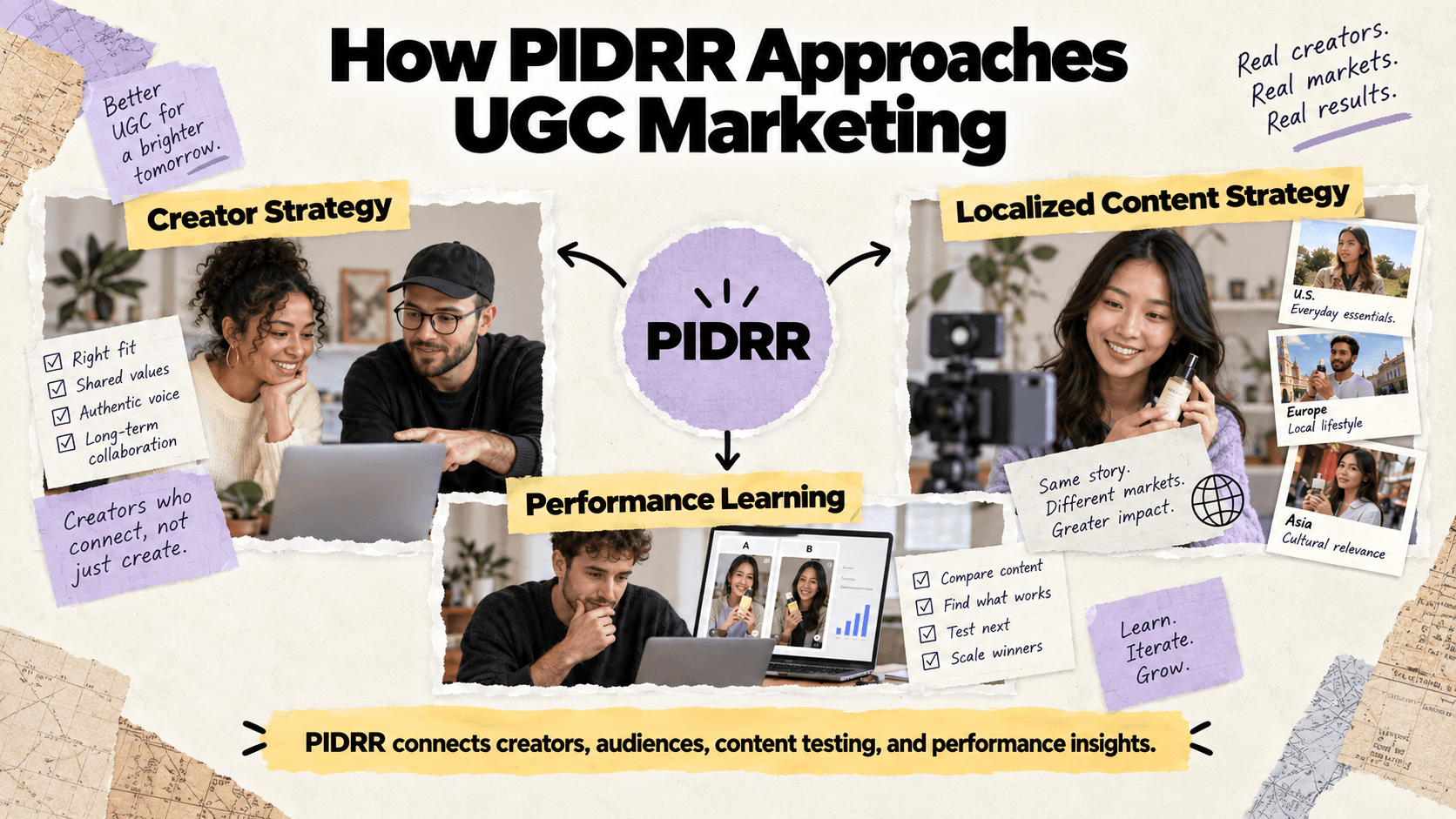
At PIDRR, we view UGC marketing as more than a content production process.
PIDRR helps brands build a repeatable system that connects creators, target audiences, content testing, and performance insights.
A strong UGC program should help brands answer important questions:
The creators that connect with specific audiences
The messages that create stronger engagement
The content formats that work best in different markets
The changes that could improve future campaigns
Our approach focuses on three key areas.
Creator Strategy
Finding creators should go beyond follower numbers.
The right creator depends on:
Audience fit
Communication style
Market relevance
Content quality
Brand alignment
A creator should feel natural to the audience they reach.
This is especially important for global campaigns because audiences in different markets may respond to different voices, storytelling styles, and experiences.
Localized Content Strategy
Global brands need consistency without making every creator sound identical.
Brands can keep the product message consistent while adapting communication for local audiences.
A localized UGC approach considers:
Cultural context
Customer habits
Language style
Market expectations
This helps brands create content that feels relevant instead of translated.
Performance Learning
UGC becomes more valuable when brands learn from every campaign.
Performance signals can help brands understand:
Which content attracts attention
Which messages create engagement
Which audiences respond
Which creative approaches should be tested next
Brands use performance data to improve future content decisions.
Frequently Asked Questions
What is UGC in 2026?
UGC in 2026 is no longer limited to customer reviews, photos, or simple social proof.
It has become a broader marketing approach that helps brands create authentic content, understand customers, test messages, and improve campaigns across different markets.
Why is UGC important for global brands?
UGC helps global brands communicate through creators who understand local audiences.
Instead of relying only on brand-created messages, companies can use creator content to show real experiences and address customer concerns in a more natural way.
What is the difference between UGC and influencer marketing?
Influencer marketing often focuses on creator reach, audience influence, and brand partnerships.
UGC marketing focuses more on authentic content creation, customer perspectives, and reusable content assets that brands can use across different channels.
The two strategies can overlap.
A creator may produce UGC-style content while also sharing content with their own audience.
How do brands create a global UGC strategy?
A global UGC strategy requires more than working with creators from different countries.
Brands need to:
Understand local audiences
Select suitable creators
Create flexible content guidelines
Test different messages
Measure performance
Apply insights to future campaigns
Successful global programs balance consistent brand positioning with local creator perspectives.
Why does localized UGC matter?
Localized UGC works because audiences often respond better to content that feels familiar.
Creators who understand local language, culture, and customer expectations can communicate product value in a way that feels more natural.
Final Thoughts
UGC has evolved from a simple trust-building tactic into a global growth system.
The brands that benefit most will not focus only on creating more content.
They will focus on learning from every piece of creator content.
They will understand:
Which creators connect with audiences
Which messages create action
Which stories work across different markets
The future of UGC is not only about producing videos.
Brands can turn customer perspectives into valuable insights and scalable growth opportunities.
Brands that build a structured UGC marketing system will be better prepared to adapt, learn, and grow in a competitive global market.
If you’re planning a UGC campaign and need help with content creation or social media publishing, discuss your UGC project with PIDRR. Tell us about your product, target markets, and what you want the content to achieve.
NEED A PARTNER?
Talk with the PIDRR team about your next social strategy, content system or campaign.
Contact Our Team


